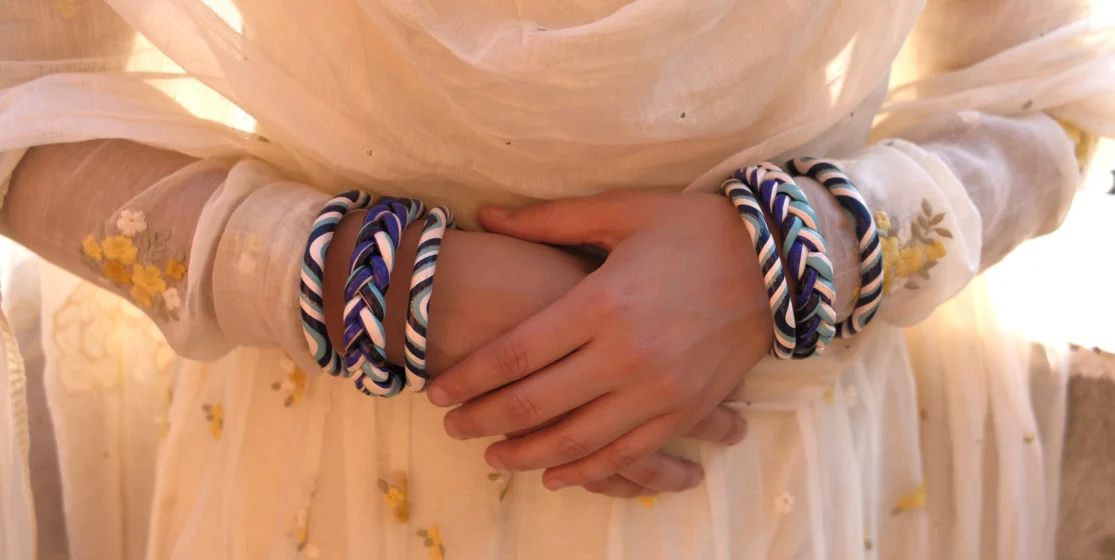
Lac Bangles in Rajasthani Weddings: Where Hindu Traditions Meet Muslim Craftsmanship
A story of faith, artistry, and communal harmony woven through the melodious chime of wedding bangles
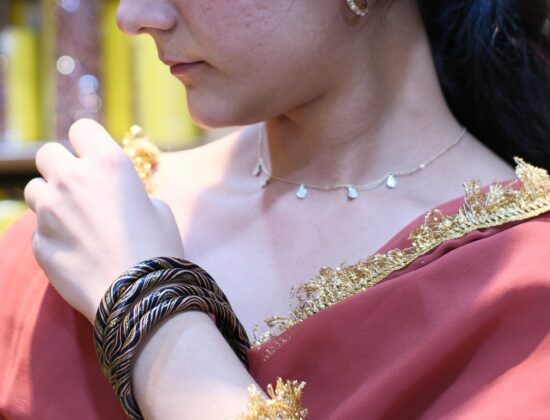
In the vibrant tapestry of Rajasthani culture, few symbols capture the essence of tradition, love, and unity quite like lac bangles worn by a bride. These colorful circles of joy are not merely ornamental—they represent centuries of Hindu wedding traditions, Islamic artisan excellence, and a beautiful example of communal harmony that has flourished in India for generations.
The Sacred Significance of Bangles in Hindu Weddings
Symbols of Matrimony and Prosperity
In Hindu culture, bangles hold profound spiritual and cultural significance, particularly in the context of weddings and married life. The tradition of wearing bangles dates back to ancient Vedic times, mentioned in texts and scriptures as symbols of auspiciousness and marital bliss.
The Spiritual Meaning
According to Hindu beliefs, bangles are more than decorative jewelry:
- Circle of Eternity: The circular shape represents the eternal bond of marriage, with no beginning and no end
- Protection and Good Fortune: The sound of bangles is believed to ward off negative energies and attract prosperity
- Shakti (Power): Bangles symbolize feminine energy and the strength of a married woman
- Suhaag (Marital Status): In many Hindu communities, empty wrists are considered inauspicious for married women
Colors and Their Meanings
Traditional Hindu weddings incorporate bangles in specific colors, each carrying symbolic meaning:
- Red: The most auspicious color, representing fertility, passion, and marital happiness
- Green: Symbolizing prosperity, growth, and new beginnings
- Yellow/Gold: Representing wealth, wisdom, and the glow of marital bliss
- Orange/Saffron: Sacred colour denoting spirituality and sanctity
The Chooda and Kalire Ceremony

In Rajasthani Hindu weddings, particularly among Marwari, Rajput, and other communities, the Chooda
ceremony is a cherished pre-wedding ritual. The bride’s maternal uncle gifts her a set of red and ivory (or
white) lac bangles, which are ritually purified with milk and rose water before being worn.
The Kalire (ornamental hanging decorations) are tied to these bangles, and the bride shakes them over
unmarried friends and relatives—whoever they fall upon is believed to be the next to marry. This joyous
ritual connects generations and spreads the blessings of marriage.
Bangles Throughout the Wedding Journey
- Mehendi Ceremony: The bride adorns colorful lac bangles that complement her henna designs, creating a symphony of color and pattern.
- Wedding Day: The bride wears an elaborate set of bangles—often numbering in dozens—covering her arms from wrist to elbow. The more bangles, the more blessed the marriage is considered.
- Post-Wedding: New brides traditionally wear bangles for a specified period (varying by community), some for months, others for the first year of marriage. The presence of bangles announces her newly married status.
The Manihars: Guardians of an Ancient Craft
Muslim Artisans, Hindu Traditions
Here lies one of the most beautiful examples of India’s syncretic culture: the artisans who create these sacred symbols of Hindu matrimony are predominantly from the Manihar community—Muslim craftspeople who have dedicated generations to perfecting the art of bangle making.
Who Are the Manihars?
The Manihars (also known as Saiqalgar in some regions) are a traditional Muslim artisan community whose name literally translates to “makers of jewels” or “bangle makers.” Concentrated primarily in Rajasthan, particularly in Jaipur’s Tripoliya Bazar, these skilled craftspeople have been creating lac bangles for centuries.
A Hereditary Craft
- Skills are passed from father to son, mother to daughter
- Children grow up watching, learning, and eventually mastering the craft
- Family workshops operate in the same locations for generations
- Techniques and secret designs are carefully preserved within families
The Workshop Legacy
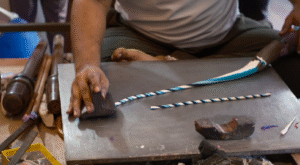
Walk through Jaipur’s Tripoliya Bazar, and you’ll find Manihar families working in workshops that have
stood for generations. Here, grandfathers work alongside sons and grandsons, each contributing their
expertise to create bangles that will adorn Hindu brides across the country.
The Spiritual Dedication of Manihar Artisans
What makes the Manihar contribution truly remarkable is the spiritual respect they bring to their craft:
Understanding Sacred Significance: Despite belonging to a different faith, Manihar artisans have deep
knowledge and respect for the religious and cultural significance of the bangles they create for Hindu
weddings. They understand what each color represents, which designs are considered auspicious, and the
importance of their craft in Hindu rituals.
Attention to Auspiciousness: Many Manihar artisans begin their work with prayers, seeking blessings for
the brides who will wear their creations. They take pride in knowing their bangles will be part of sacred
ceremonies and life’s most important moments.
Quality as Sacred Duty: For Manihars, creating wedding bangles is not merely commercial—it’s a
responsibility. They understand that they’re contributing to someone’s most precious memories, and this
awareness drives their commitment to excellence.
A Symbol of Communal Harmony
Two Faiths, One Beautiful Tradition
The relationship between Hindu brides and Muslim Manihar artisans represents one of India’s most enduring examples of communal harmony and mutual respect. This beautiful synthesis demonstrates how faith, culture, and craft can transcend religious boundaries.
Mutual Dependence and Respect
For centuries, Hindu families have relied on Manihar artisans for their wedding needs, and Manihar families have built their livelihoods creating objects of sacred significance for another faith. This interdependence has fostered:
- Deep personal relationships between families across communities
- Mutual understanding and respect for each other’s traditions
- Economic bonds that strengthen social cohesion
- Cultural exchange that enriches both communities
Shared Pride in Rajasthani Heritage
Both Hindu patrons and Muslim Manihar artisans take equal pride in Rajasthan’s rich cultural heritage. The lac bangles are not seen as belonging to one community or another—they’re recognized as part of a shared cultural legacy that defines Rajasthani identity.
Stories of Unity
Throughout Rajasthan, countless stories illustrate this harmony:
The Trusted Family Artisan: Many Hindu families have been purchasing bangles from the same Manihar family for generations. These relationships often extend beyond commerce—Manihar artisans are invited to weddings, celebrate festivals together with their patrons, and maintain lifelong friendships.
- Stories of Unity Throughout Rajasthan, countless stories illustrate this harmony:
- The Trusted Family Artisan: Many Hindu families have been purchasing bangles from the same Manihar family for generations. These relationships often extend beyond commerce—Manihar artisans are invited to weddings, celebrate festivals together with their patrons, and maintain lifelong friendships.
- The Artisan’s Blessing: It’s not uncommon for Manihar artisans to personally bless the bangles they create for brides, praying for their happiness and prosperity regardless of religious differences.
- Crisis and Support: During difficult times—whether personal tragedies, economic hardships, or communal tensions—stories abound of Hindu families supporting their Manihar artisan friends and vice versa, demonstrating bonds stronger than mere business relationships.
Rajasthani Weddings: A Celebration of Color, Tradition, and Unity
The Grand Rajasthani Wedding Tradition
Rajasthani weddings are legendary for their grandeur, color, and multi-day celebrations. These magnificent events blend ancient rituals with joyous festivities, and bangles play a starring role throughout.
Pre-Wedding Festivities
- Sagai (Engagement): Simple bangles may be gifted to announce the engagement
- Tilak/Roka: Both families exchange gifts, often including decorative bangles
- Mehendi: The bride wears colorful bangles that coordinate with her henna designs
- Sangeet: The melodious sound of bangles becomes part of the musical celebration
- Chooda Ceremony: The sacred moment when wedding bangles are formally worn
The Wedding Day Splendour
On the wedding day, the Rajasthani bride is a vision of color and tradition. Her arms, adorned with dozens
of lac bangles in coordinating colors, create a visual and auditory symphony. The bangles:
- Complement her heavily embroidered lehenga
- Coordinate with her elaborate jewelry
- Create a melodious sound with every movement
- Symbolize her transition into married life
Post-Wedding Traditions
- Grihapravesh: The bride enters her new home with bangles chiming auspiciously
- First Karwa Chauth: New brides often wear their wedding bangles for this fast
- Extended Wear: Many brides continue wearing bangles throughout the first year
Regional Variations Across Rajasthan
Different regions of Rajasthan have unique bangle traditions:
- Marwari Weddings: Emphasis on red and ivory chooda with elaborate kalire
- Rajput Weddings: Bold, colourful bangles in traditional warrior colours—red, saffron, and gold
- Shekhawati Region: Preference for intricate filigree work and embedded mirrors
- Mewar Region: Combination of thick and thin bangles in alternating colors
The Contemporary Relevance: Preserving Harmony Through Craft
Challenges in Modern Times
- Economic Pressures: Mass-produced synthetic bangles from factories threaten the livelihood of traditional Manihar artisans
- Communal Tensions: Occasional incidents of communal discord can strain age-old relationships
- Generational Changes: Younger Manihars sometimes choose different professions, threatening the continuity of traditional skills
- Urbanization: Modern brides sometimes prefer imported or designer jewellery over traditional lac bangles.
The Importance of Conscious Choices
Now more than ever, choosing authentic lac bangles from traditional Manihar artisans is an act that
transcends commerce—it’s a statement of values:
- Supporting Interfaith Harmony: Every purchase from traditional artisans reinforces bonds of trust and mutual respect between communities.
- Preserving Cultural Heritage: Authentic lac bangles carry forward centuries of shared cultural history.
- Economic Justice: Supporting artisan families ensures dignified livelihoods and prevents the erosion of traditional skills.
- Quality and Authenticity: Handcrafted bangles by skilled Manihars are incomparably superior to mass-produced alternatives.
Nayyer Bangles: Honoring Tradition, Celebrating Unity
Located in the historic heart of Jaipur’s Tripoliya Bazar—the epicenter of traditional bangle making— Nayyer Bangles stands as a proud testament to centuries of Manihar craftsmanship and the beautiful tradition of communal harmony.
Authentic Manihar Craftsmanship
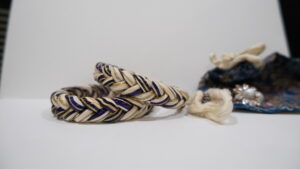
At Nayyer Bangles, every piece is created by skilled Manihar artisans who have inherited their craft through generations. These master craftspeople bring:
- Decades of experience and inherited expertise
- Deep understanding of Hindu wedding traditions and their significance
- Commitment to using pure lac and traditional techniques
- Pride in their role as custodians of cultural heritage
Bangles for Every Sacred Moment
Nayyer Bangles offers comprehensive collections for all your wedding needs:
- Chooda Sets: Traditional red and ivory bangles for the sacred chooda ceremony
- Mehendi Bangles: Colourful sets to complement henna designs
- Bridal Collections: Elaborate sets for the wedding day
- Customization: Personalized designs to match your wedding theme and colours
- Gift Sets: Beautiful bangle sets for gifting during wedding celebrations
Preserving Tradition, Supporting Artisans
When you choose Nayyer Bangles, you’re not just purchasing jewelry:
- You support traditional Manihar artisan families
- You preserve centuries-old craftsmanship techniques
- You participate in a beautiful tradition of interfaith cooperation
- You receive authentic, handcrafted bangles of exceptional quality
- You become part of a story that celebrates India’s syncretic culture
The Nayyer Bangles Promise
- Authenticity: 100% pure lac, traditional techniques, genuine Manihar craftsmanship
- Quality: Each piece carefully crafted and inspected
- Cultural Sensitivity: Deep respect for the sacred significance of wedding bangles
- Convenience: Order online and receive authentic Rajasthani bangles anywhere in India
- Support: Guidance on selection, sizing, and care for your precious bangles
Planning Your Rajasthani Wedding: A Guide to Choosing Bangles
Timing Your Bangle Purchase
- 3-4 Months Before Wedding: Start exploring designs and colour schemes.
- 2 Months Before: Place orders, especially for customized designs.
- 1 Month Before: Receive bangles and ensure proper fit.
- 1 Week Before: Conduct the chooda ceremony with prepared bangles.
Selecting the Perfect Bangles
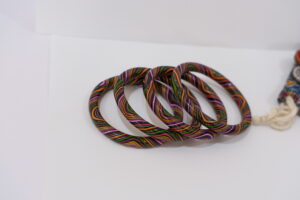
- Consider Your Wedding Colours: Choose bangles that complement your lehenga and jewellery.
- Mix Traditional and Contemporary: Blend classic red with modern colour combinations
- Think About Comfort: You’ll wear these for hours—ensure they fit properly.
- Coordinate with Rituals: Different Ceremonies may call for different bangle sets.
- Personal Significance: Some brides choose colours with personal or family meaning.
How Many Bangles?
Traditional guidelines vary, but generally:
- Chooda Ceremony: 21-51 bangles per arm (always odd numbers, considered auspicious)
- Wedding Day: Can range from covering wrists to entire forearms
- Modern Trend: Many brides opt for 15-25 bangles per arm for comfort
- Post-Wedding: Reduced sets that can be worn comfortably during daily activities
Caring for Your Wedding Bangles
These precious symbols of your special day deserve proper care:
- Store in original packaging away from sunlight
- Keep separate to prevent scratching
- Avoid contact with water, perfumes, and chemicals
- Handle gently when wearing or removing
- Consider preserving your chooda bangles as keepsakes.
The Deeper Meaning: Love, Unity, and Shared Heritage
Beyond Religion, A Shared Culture
The story of lac bangles, Hindu weddings, and Muslim Manihar artisans teaches us profound lessons:
- Diversity as Strength: Different faiths and traditions can not only coexist but enrich each other.
- Economic Interdependence: Shared prosperity builds stronger bonds than religious divisions.
- Cultural Ownership: Heritage belongs to all who cherish and preserve it, regardless of faith.
- Respect and Understanding: Deep knowledge of another’s sacred traditions fosters genuine harmony.
- Legacy of Unity: What we preserve and pass on to future generations matters.
A Model for Modern India
In an era sometimes marked by division, the centuries-old relationship between Hindu brides and Muslim Manihar artisans offers a powerful counter-narrative:
- Communities can maintain their distinct identities while collaborating beautifully.
- Sacred traditions can be respected and facilitated across religious lines.
- Economic relationships can evolve into genuine friendships and mutual respect.
- Craft and culture can serve as bridges rather than barriers.
Conclusion: Every Bangle Tells a Story of Harmony
When a Hindu bride wears lac bangles crafted by Muslim Manihar artisans on her wedding day, she participates in a tradition that transcends religious boundaries. Each melodious chime of those bangles is a sound of unity—a reminder that India’s greatest strength lies in its diversity and the beautiful ways different communities have woven their talents and traditions together.
These bangles are not just jewellery; they’re symbols of:
- Love that transcends all boundaries
- Craftsmanship passed down through generations
- Faith communities respecting each other’s sacred traditions
- Economic relationships that build social bonds
- India’s syncretic culture at its finest
As you plan your Rajasthani wedding and select your bangles, remember that you’re not just choosing accessories—you’re becoming part of a centuries-old story of harmony, respect, and shared cultural heritage. You’re supporting artisan families who have dedicated generations to perfecting their craft. You’re keeping alive traditions that represent the best of what India stands for.
Choose authentic. Choose traditional. Choose unity.
Visit Nayyer Bangles to explore exquisite collections of authentic lac bangles, handcrafted by master Manihar artisans in the heart of Jaipur’s historic Tripoliya Bazar. Every purchase supports traditional craftsmanship, preserves cultural heritage, and celebrates the beautiful harmony that defines Rajasthani culture.
Nayyer Bangles – Shop No. 333, Tripoliya Bazar, Jaipur, Rajasthan
Website: nayyerbangles.com | Email: nayyerbangles@gmail.com | WhatsApp: +91 9529541004
Where Hindu traditions meet Muslim craftsmanship. Where bangles become symbols of unity. Where every chime celebrates harmony.
For your special day, choose bangles that carry not just beauty, but also a legacy of peace, respect, and togetherness.